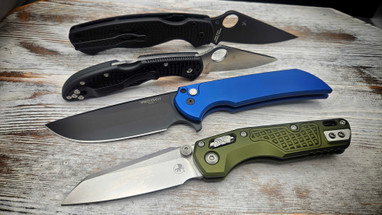
Oct 1st 2026
Knife Locking Systems Explained: Liner Lock, Frame Lock, RAM-LOK, and More
The lock on a folding knife is what keeps the blade open when you're using it. The most common types are the liner lock, frame lock, lockback, compression lock, AXIS lock, button lock, and RAM-LOK — and each one works differently. Some are easier to close with one hand, some work equally well for left and right handed users, and some are stronger under heavy use. Here's a plain-English breakdown of every major lock type so you can make a smarter buying decision.
Why the Lock Matters
Most people shopping for a knife focus on how it looks and what steel the blade is made from. Both matter — but the lock is what keeps the blade from folding onto your fingers mid-cut. Whether you're looking at a Microtech RAM-LOK folder, a Benchmade with an AXIS Lock, a Pro-Tech with a button lock, or a Spyderco with a compression lock — understanding how each system works before you buy makes you a better, safer knife owner.
Liner Lock
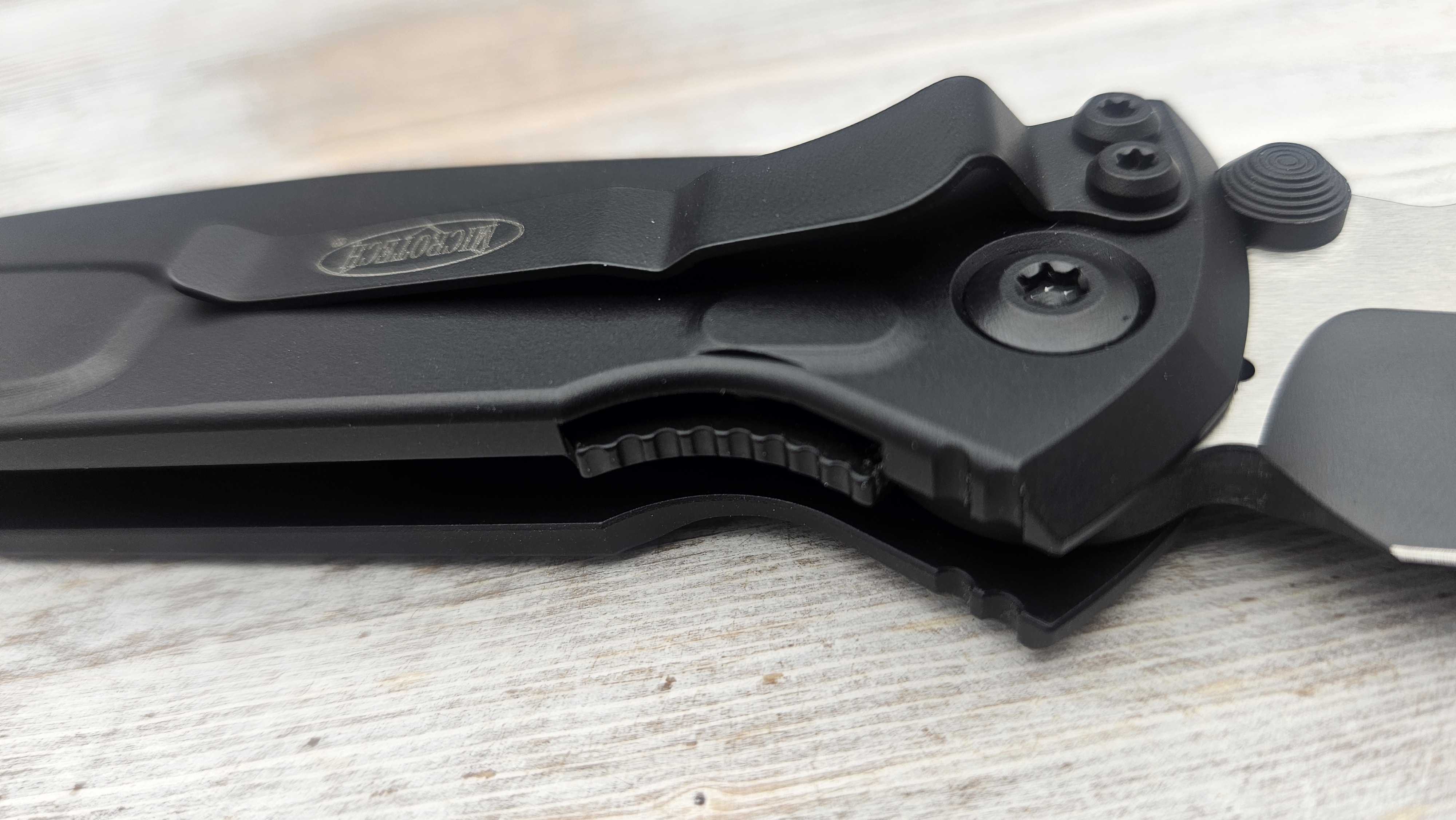
[Image: Microtech Socom]
The liner lock is the most common lock you'll find on folding knives — chances are your first knife had one.
Inside the handle there's a thin strip of metal. When you open the blade all the way, that strip snaps behind the blade and holds it open. To close the knife, push that strip out of the way with your thumb and fold the blade back in.
What's good: Simple, reliable, and found at every price point. Does the job for everyday carry without any complexity. Easy to understand and maintain.
Watch out for: You have to put your thumb near the blade to close it. Not dangerous with proper technique, but worth knowing as a new user. Also works more naturally for right-handed users than left.
Who makes it: Spyderco and CRKT are two of the most popular examples. Microtech also have some models. Found across budget through premium price points.
Frame Lock
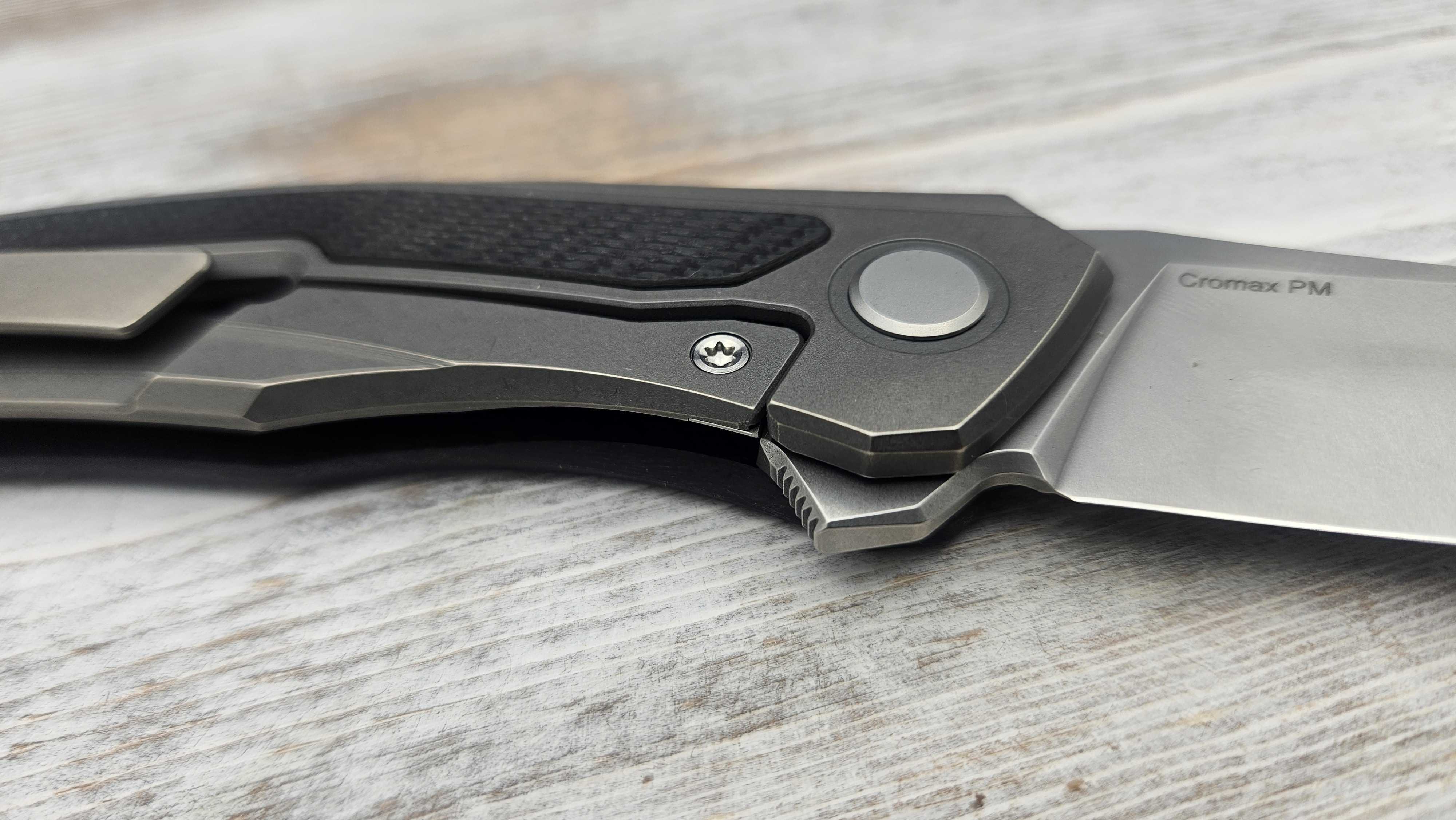
[Image: Shirogorov Quantum Ursus]
The frame lock works exactly like a liner lock — but instead of a separate strip of metal inside the handle, a portion of the handle itself acts as the lock. Because the handle is usually thicker material, often titanium, the frame lock is generally stronger and more durable than a standard liner lock.
Think of it as the liner lock's tougher older sibling. Same idea, better materials, cleaner design.
What's good: Excellent strength. Clean minimal look. Fewer parts means less that can go wrong. The standard lock for premium titanium folders.
Watch out for: Same thumb-near-blade closing as a liner lock. Can be trickier to operate in cold weather or with gloves on.
Who makes it: Custom Knife Factory, Shirogorov, and Reate are respected brands using the frame lock.
Lockback
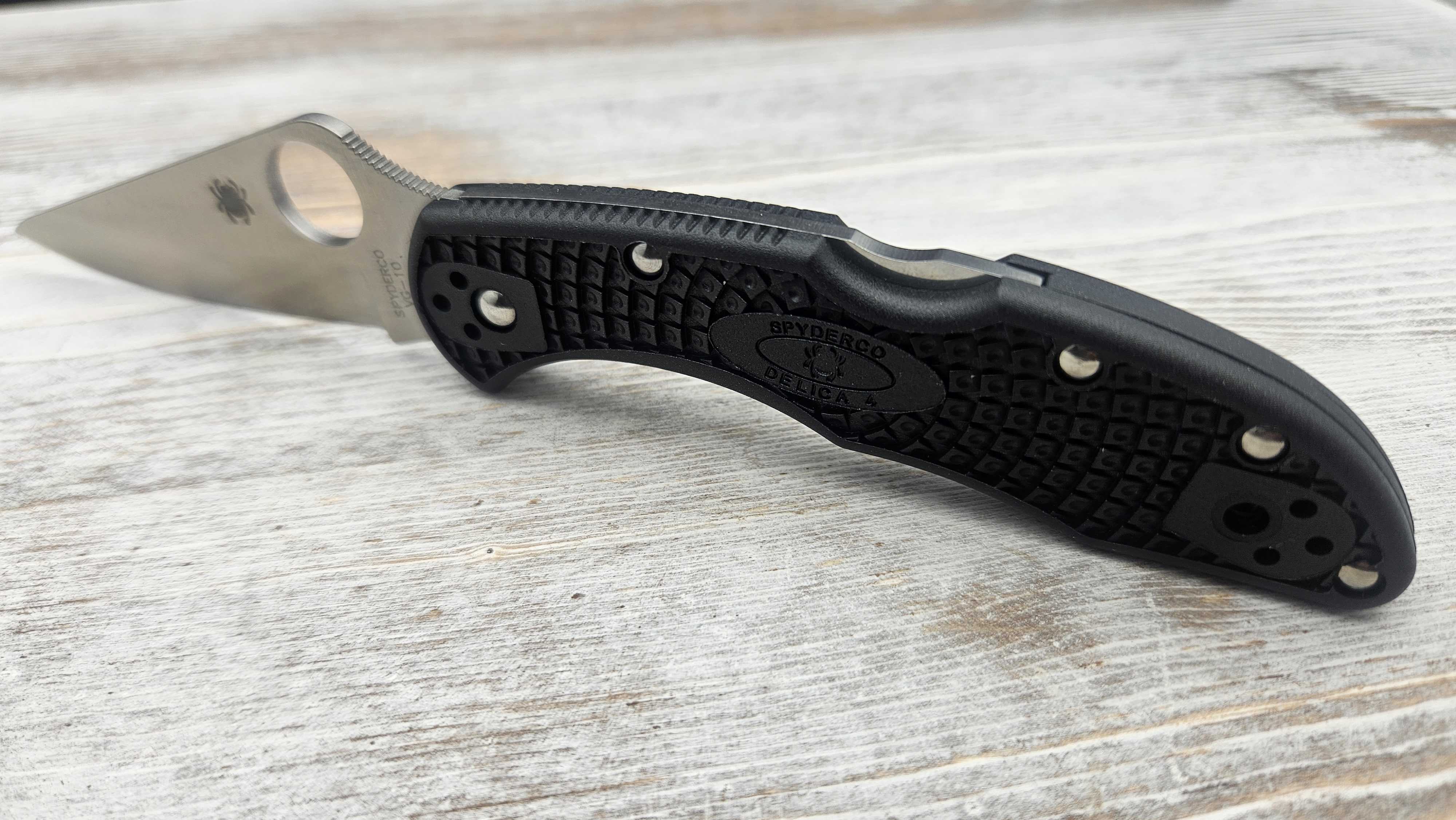
[Image: Spyderco Native Chief]
The lockback is one of the oldest knife locks around — and it's still popular for good reason. A spring-loaded bar runs along the spine of the handle. When the blade opens all the way, the bar snaps into a notch in the blade and holds it there. To close, press a rocker on the spine of the handle and the blade folds back in.
The key thing about a lockback: the release is on the spine — the top of the handle — not near the blade. That means your fingers stay away from the edge when closing.
What's good: Very safe — fingers never go near the blade when closing. Strong and reliable. Works equally well for left and right handed users.
Watch out for: Usually requires two hands or a grip change to close. Not the best option if you need true one-handed operation.
Who makes it: Spyderco classic models are the great examples.
Compression Lock
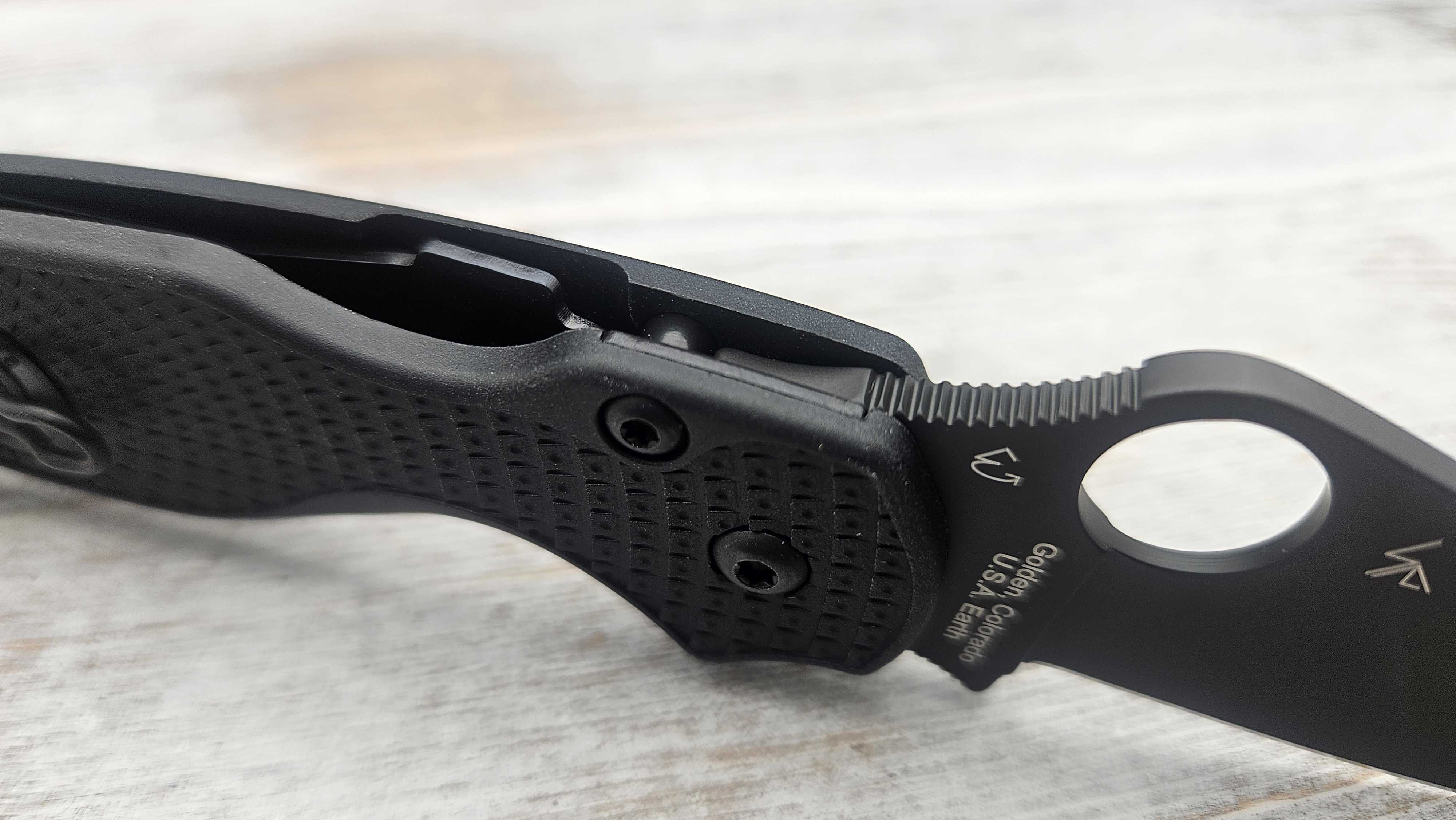
[Image: Spyderco Para Military 2]
The compression lock was invented by Spyderco and is one of the smartest lock designs available. It looks similar to a liner lock from the outside but works differently — and much stronger.
When the blade opens, a piece of metal inside the handle locks behind the blade from the top rather than the side — and the harder you push during cutting, the tighter it holds. To close, you push that piece of metal out of the way from the spine side of the handle — not the blade side — which keeps your fingers completely clear.
What's good: One of the strongest locks available. Finger-safe closing. Works equally well for left and right handed users. Smooth fast one-handed operation — also one of the most satisfying locks to fidget with.
Watch out for: More complex to manufacture which adds to the price. Mainly found on Spyderco knives since it's their proprietary design.
Who makes it: Spyderco — the Para Military 2, Para 3, and Manix 2 are the most popular examples. If you carry a Spyderco folder, it likely has a compression lock.
AXIS Lock
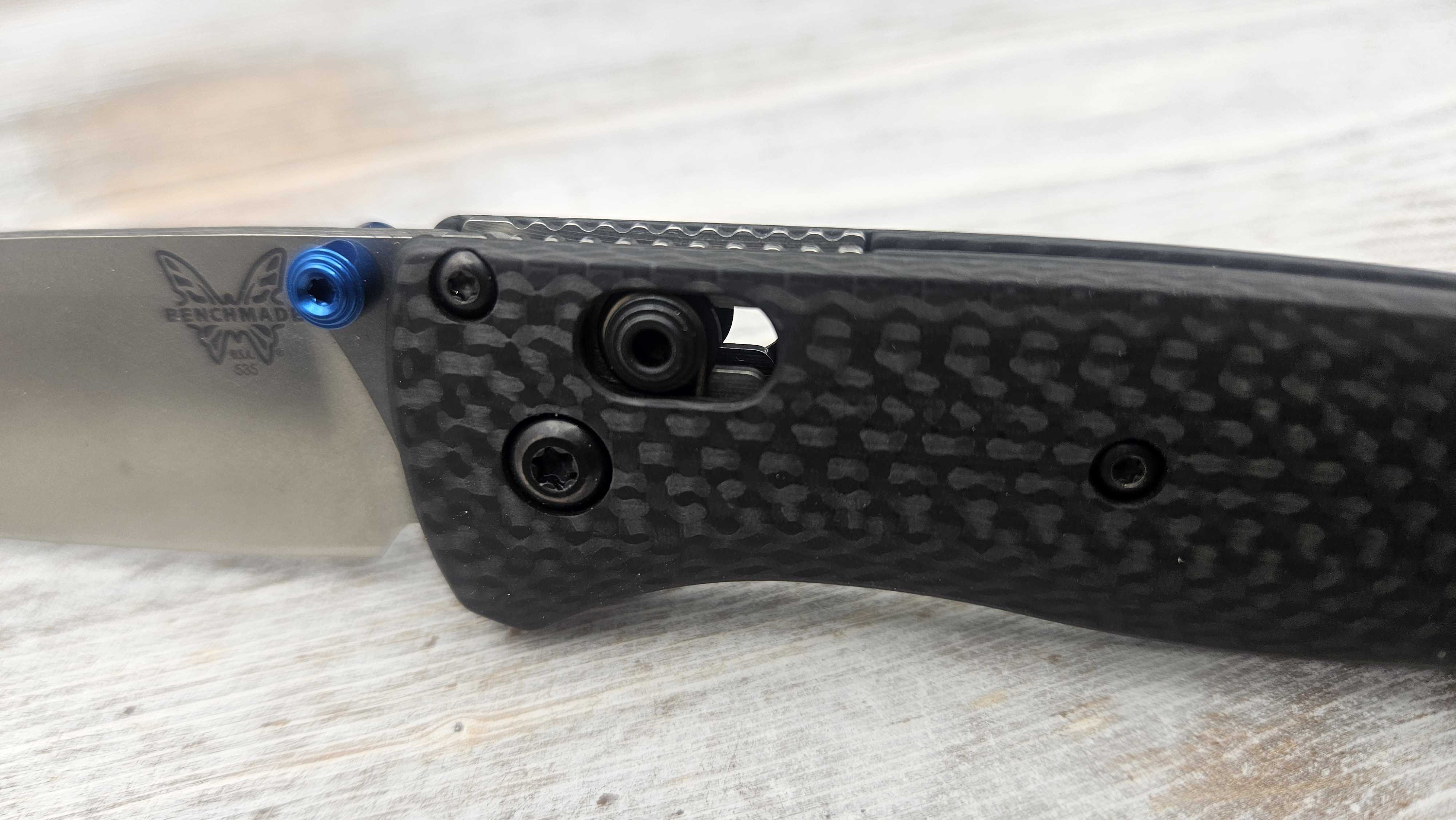
[Image: Benchmade Bugout]
The AXIS Lock was invented by Benchmade and introduced in 1998. It's a small steel bar that sits across the handle crossways. When the blade opens fully, that bar snaps into position and holds the blade open. To close, pull the bar back from either side and fold the blade in.
Because the bar is accessible from both sides of the handle, it's fully ambidextrous — right or left hand, same operation, no adjustment needed.
What's good: Fully ambidextrous. Fingers stay away from the blade when closing. Extremely strong. Smooth and satisfying to operate — one of the most popular EDC locks for a reason.
Watch out for: The internal springs can wear over time with very heavy use and eventually need replacing. Slightly more complex than a liner or frame lock.
Who makes it: Benchmade across most of their lineup — the Bugout and Crooked River are popular examples. After Benchmade's patent expired in 2018 other brands released similar designs under different names — Kershaw calls theirs the DuraLock.
Button Lock
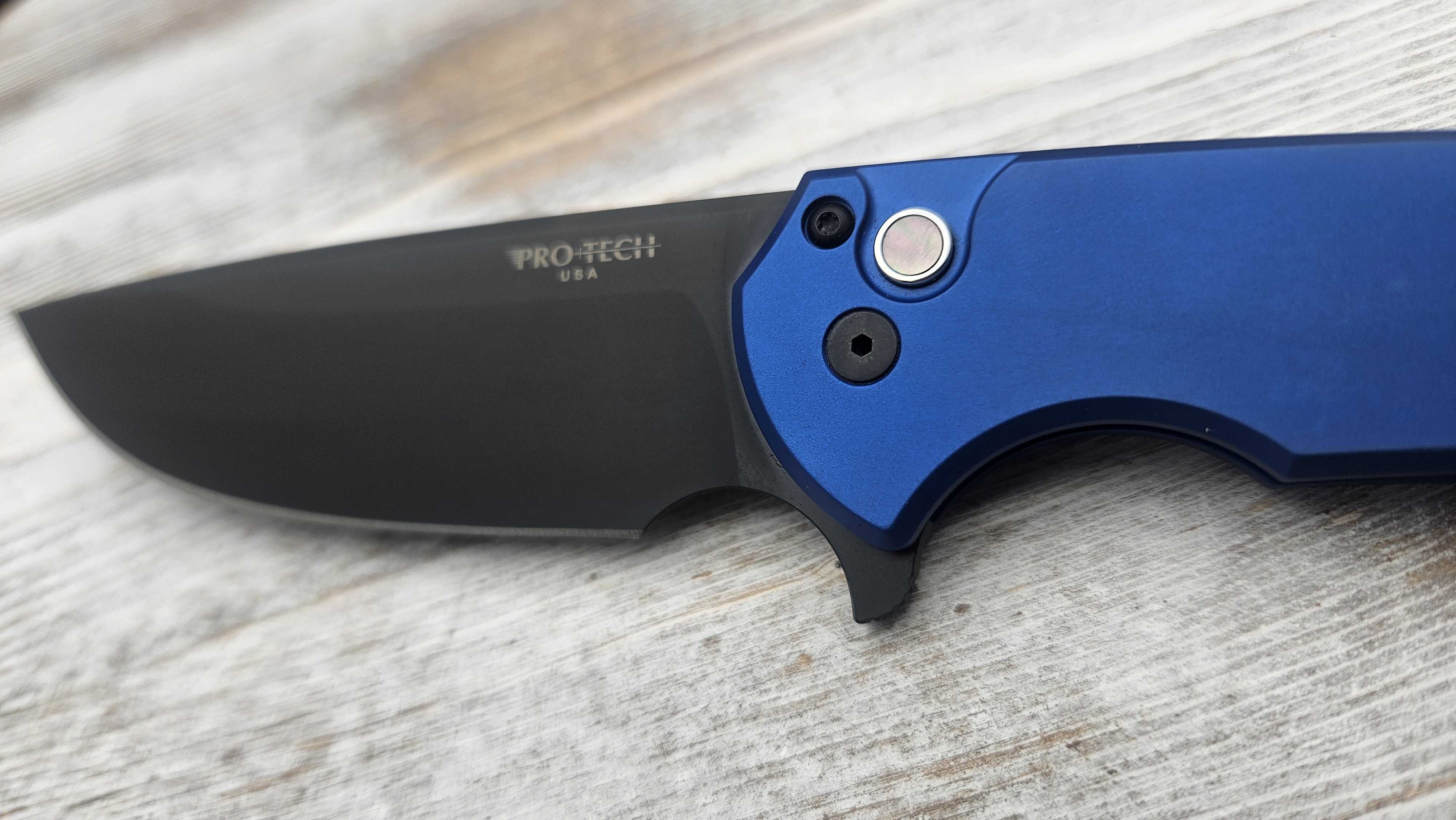
[Image: Pro-Tech Mordax]
The button lock is a popular locking mechinism found on both manual and automatic folding knives. It uses a spring-loaded plunger inside the handle that engages the blade when it reaches the open position, securely locking it in place. Pressing the button disengages the lock, allowing the blade to close.
Button locks have become increasingly popular on manual folders because they’re easy to operate, keep your fingers away from the blade’s closing path.
What’s good: Simple and intuitive operation. Easy one-handed closing. Keeps your fingers out of the blade when disengaging the lock.
Watch out for: Button locks can vary considerably in feel and lockup depending on the design and manufacturer. Some may develop button stick or slight blade play if the lock isnt fitted properly. Also, don't assume a knife is an automatic simply because it has a button lock, the locking and deployment mechanisms are separate.
Who makes it: Pro-Tech is well known for button-operated knives and also produces excellent manual button lock folders. The Mordax and Malibu are two popular examples, combining a manual flipper deployment with Pro-Tech’s Button lock mechanism. Other manufacturers also offer button locks in a wide range of designs and price points.
RAM-LOK
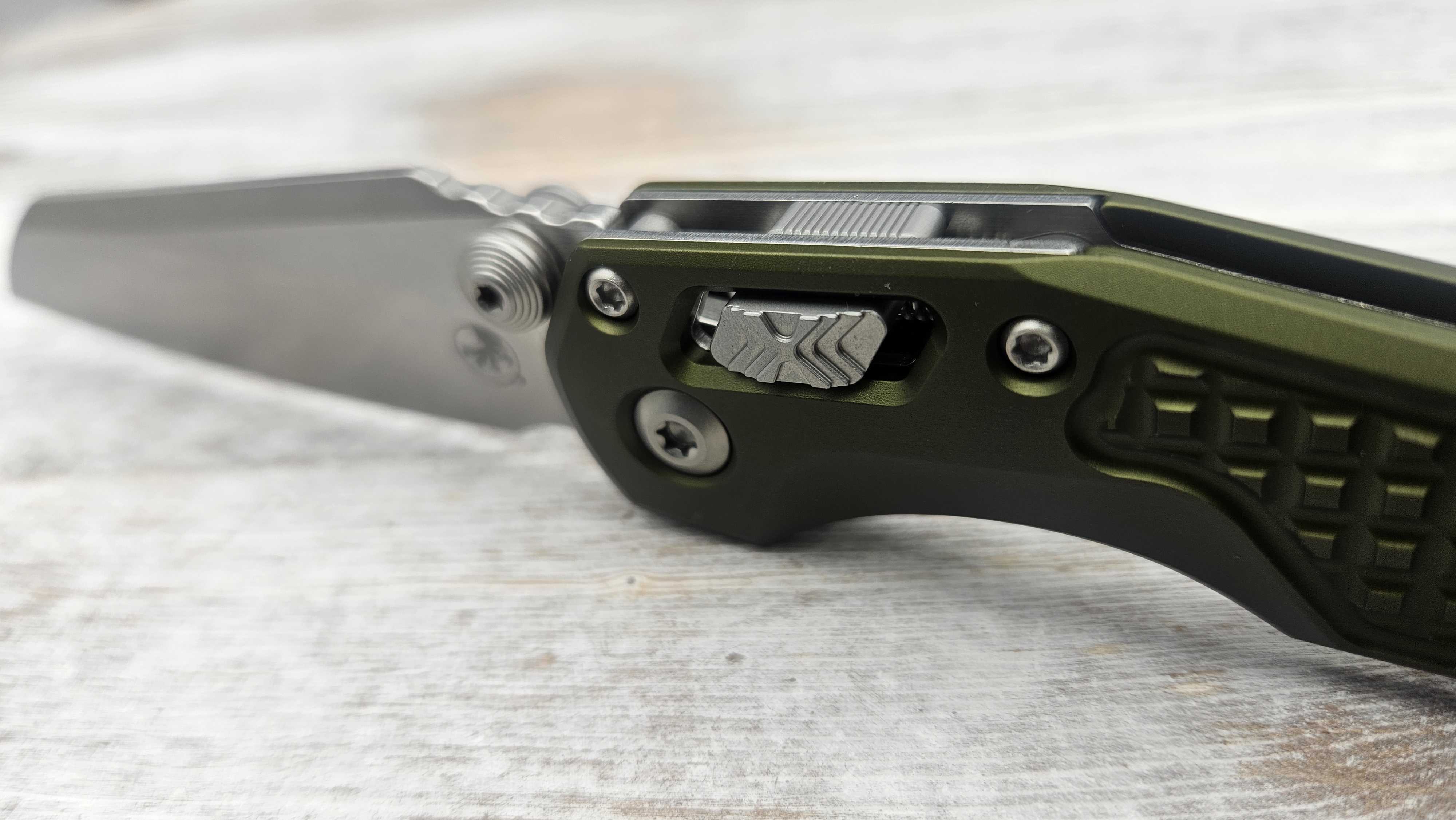
[Image: Microtech MSI Mini]
RAM-LOK is Microtech's own take on the crossbar lock concept — engineered by Tony Marfione specifically for Microtech's manual folding knife lineup. Like the AXIS Lock it uses a bar that sits across the handle and locks the blade open. But Microtech took the concept further.
Instead of small omega springs, RAM-LOK uses a heavy duty coil spring that's more resistant to dirt and wear. The release is handled by the iconic X-Button — two large grippy pads on either side of the handle spine that you press to disengage the lock. More surface area, easier to press, works great with gloves on.
Of all the crossbar locks on the market today, RAM-LOK is the most refined production version available. The coil spring, the overbuilt crossbar, and the X-Button release all represent deliberate improvements over earlier crossbar designs — and the result is a lock that feels more substantial in hand than anything in its class.
What's good: Fully ambidextrous. Fingers stay completely away from the blade when closing. Coil spring handles debris better than omega springs. Rock solid lockup. Extremely satisfying to use — the snap of a RAM-LOK opening and closing is one of the most distinctive feels in the manual folder market.
Watch out for: Some early 2023 production models had isolated issues with the lock disengaging when tapped hard against a surface. Microtech addressed this in subsequent runs — current production RAM-LOK knives do not have this issue.
Who makes it: Microtech — the MSI, MSI Mini, Stitch RAM-LOK, Mini Stitch, SOCOM Ram-Lok, SOCOM Delta, and LUDT RAM-LOK. Browse the full RAM-LOK lineup at EDCLIFESTYLE.COM.
Which Lock Is Right for You?
If you want something simple and proven — liner lock. The most common lock in the world for a reason. Reliable, easy to understand, works at every price point.
If you want the strongest possible folder — frame lock or compression lock. Frame locks dominate premium titanium folders. Compression lock is Spyderco's signature and earns its reputation.
If you want the fastest deployment possible — button lock on an automatic knife. Pro-Tech's button lock mechanism is as smooth and fast as it gets. Just verify your local laws before purchasing.
If you want the best ambidextrous everyday carry lock available — RAM-LOK is our top recommendation. Fully ambidextrous, finger-safe, debris-resistant, and built to Microtech's exacting standards. For buyers who want one knife that works flawlessly in any condition with either hand, nothing in the manual folder market touches it. The AXIS Lock is an excellent alternative if you prefer Benchmade's lineup.
If you carry in gloves or work in dirty conditions — RAM-LOK is the clear choice. The X-Button is easy to press with gloves on and the coil spring handles dirt better than any omega spring design.
If you’re looking for budget friendly folders — frame lock knives from Spyderco, BergBlades, and Reates are ideal.
If you're a collector focused on premium folders — Boraka Blades, Marfione Custom Knives, & Strider Knives are the standard at the top of the market.
FAQ
Frame locks, compression locks, and crossbar locks like the AXIS and RAM-LOK all perform extremely well under stress. For practical everyday use the differences are negligible — any of these locks will outlast most users' needs.
Which lock is safest for beginners?
Lockbacks, button locks, and crossbar locks — AXIS and RAM-LOK — are the most beginner friendly because your fingers never go near the blade when closing. Liner and frame locks are perfectly safe with proper technique but take a little more awareness.
Is RAM-LOK the same as the AXIS Lock?
Similar concept, different execution. Both are ambidextrous crossbar locks. RAM-LOK uses a heavier coil spring and a larger X-Button release — making it slightly more debris-resistant and easier to operate with gloves. The feel in hand is also noticeably different — most users find RAM-LOK has a more satisfying snap.
Do Microtech OTF knives use RAM-LOK?
No — RAM-LOK is for Microtech's manual folding knives only. OTF knives like the Ultratech and Combat Troodon use a completely different internal spring mechanism designed for out-the-front deployment.
What lock does Spyderco use?
Spyderco uses several lock types across their lineup. Their most popular premium folders — Para Military 2, Para 3, Manix 2 — use the compression lock. Some models use liner locks and their classic models use the lockback.
What is the most popular knife lock for everyday carry?
The AXIS Lock and RAM-LOK are currently the most popular choices for serious EDC buyers who want ambidextrous, finger-safe operation. The liner lock remains the most common lock overall due to its simplicity and wide availability at every price point.
What lock do Pro-Tech knives use?
Pro-Tech automatic knives use a button lock — a spring-loaded mechanism that fires the blade open at the press of a button. It's the fastest deploying lock type available and one of Pro-Tech's most distinctive features. Shop Pro-Tech at EDCLIFESTYLE.COM.
Shop our full selection of Microtech RAM-LOK folders, Benchmade AXIS Lock knives, Spyderco compression lock folders, Pro-Tech button lock automatics, and more at EDCLIFESTYLE.COM